Carpet vs Sisal Cat Trees: What Cats Prefer
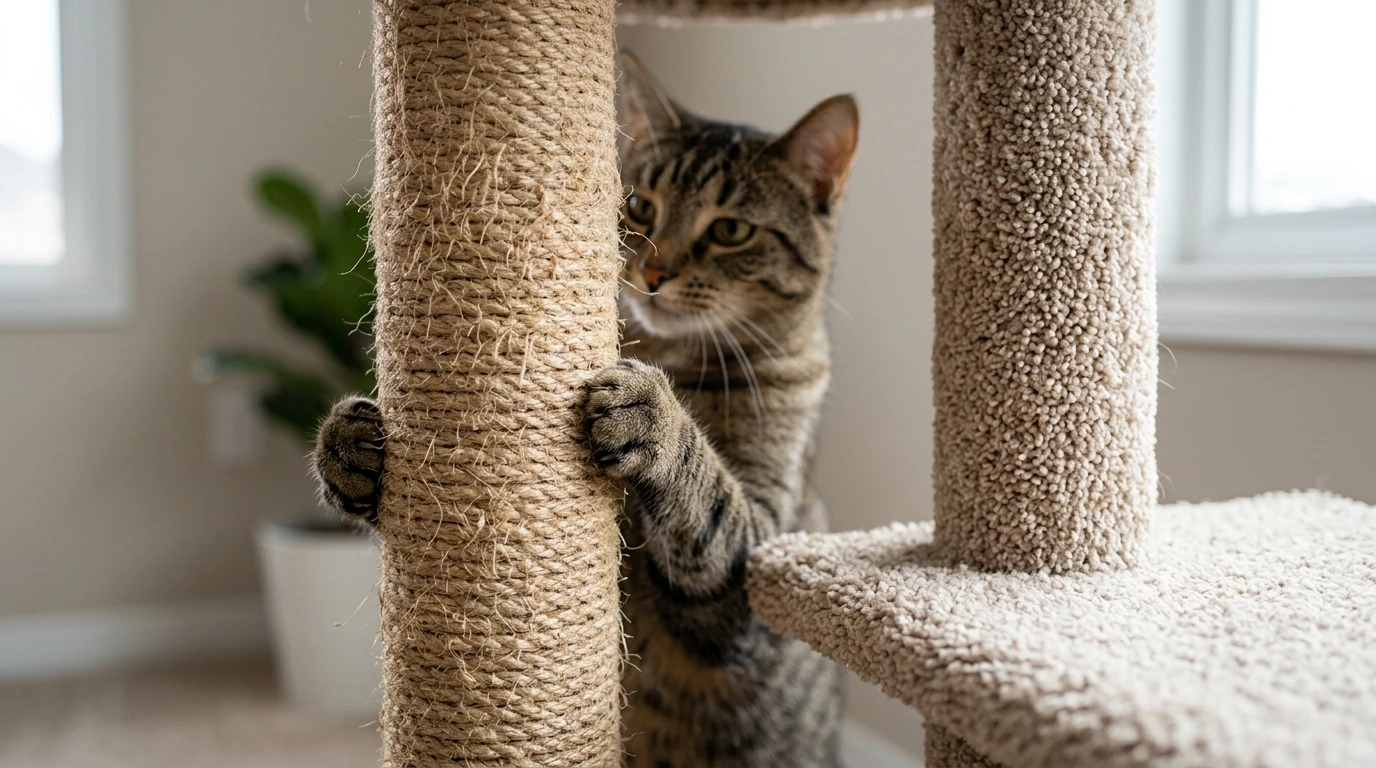
Do cats prefer carpet or sisal on trees?
Most cats tend to prefer sisal for scratching, while carpet can be more of a mixed bag. Sisal’s rough, fibrous texture grabs the outer nail sheath and gives satisfying resistance, which is why it’s commonly used on quality scratching posts. It also holds up well to repeated clawing without shedding fuzz everywhere.
Carpet can feel softer and “diggable,” so some cats enjoy it for climbing, lounging, or occasional scratching. The downside is that carpet can teach a cat that household carpeting is fair game—especially if the texture feels similar. Carpet can also fray, pull loops, and trap hair, which makes it harder to keep looking clean over time.
How to choose the best surface for your cat
If the goal is to protect furniture and rugs, a sisal-wrapped post is usually the safest bet. Look for a post that’s thick enough for a full-body stretch and stable enough that it won’t wobble. Many cats also like having at least one horizontal scratching option, but a sturdy vertical sisal post is the classic favorite.
If your cat already loves carpeted surfaces, a tree with carpeted platforms plus a dedicated sisal scratching post can be a smart compromise: the cat gets cozy perches without reinforcing carpet-scratching habits.
What if your cat ignores one material?
Preferences vary by cat and can change with age. Kittens often experiment with everything, while adult cats may lock into a favorite texture. If your cat avoids sisal at first, try sprinkling catnip near the post, placing it by a sleeping spot, or using a toy to lure a few paw swats. If your cat only scratches carpet, consider transitioning by offering sisal right next to the preferred scratching area.
For a practical look at compact cat trees and sisal posts that work well for kittens and small cats, visit this guide to compact cat trees with sisal posts.
FAQ
How do I get my cat to use a cat tree instead of furniture?
Place the tree where your cat already likes to hang out, reward any interaction with treats or play, and add catnip to the scratching area. Make furniture less appealing by covering favorite scratch spots temporarily while the tree becomes the go-to option.












Leave a comment