200/2400mm Telescope Guide: High-Power Lunar & Planet Views
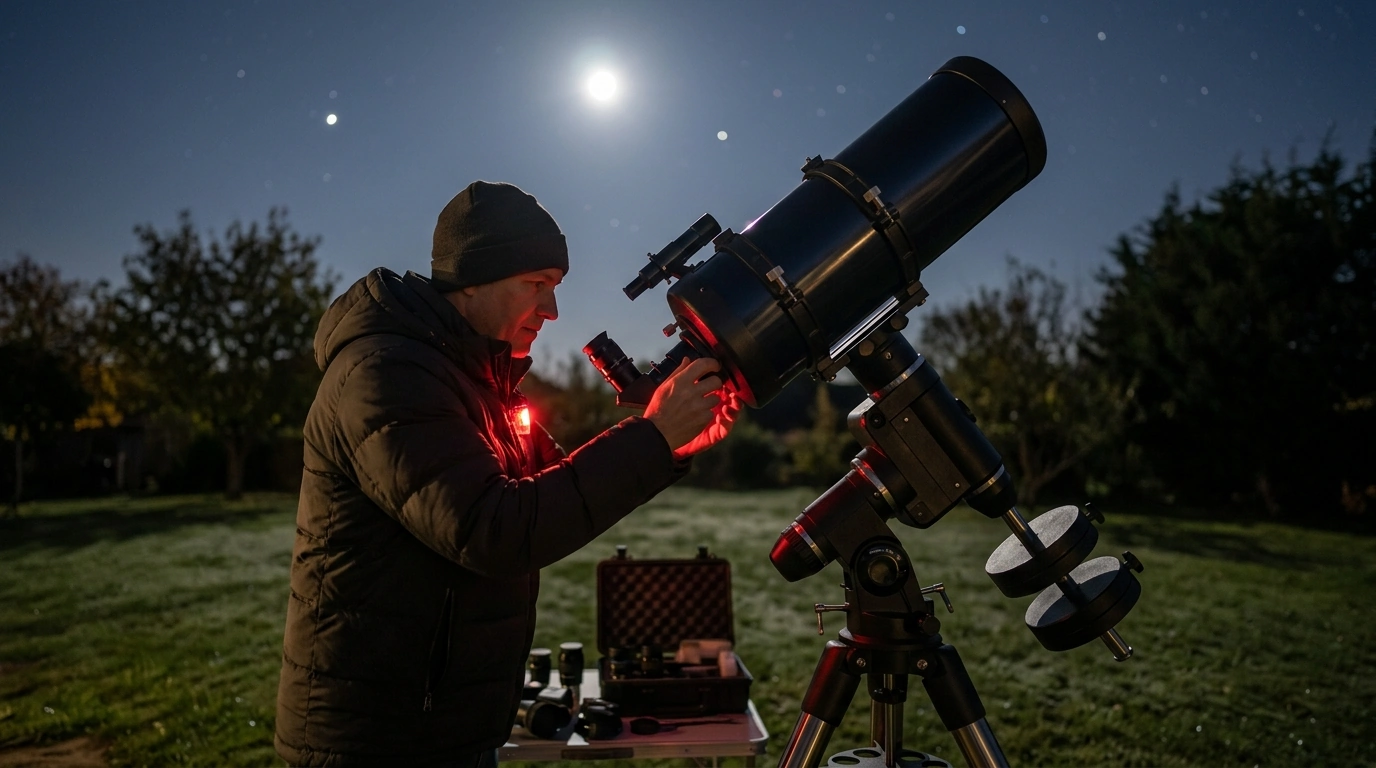
200/2400mm High-Power Astronomical Telescope for Stargazing Enthusiasts
A 200/2400mm-class telescope is built for observers who want higher magnification potential and satisfying views of the Moon, planets, and brighter deep-sky targets when conditions cooperate. This guide breaks down what the numbers mean, what to realistically expect at the eyepiece, and how to set up and use a high-power instrument for steadier, sharper sessions under the night sky.
What “200/2400mm” Means at the Eyepiece
The two specs most people notice—200mm aperture and 2400mm focal length—shape what the telescope can show and how it behaves when you change eyepieces. A 200mm aperture gathers a lot of light, helping bring out detail and supporting higher usable magnification when the atmosphere is calm. The 2400mm focal length makes it easier to reach “planetary” powers with common eyepieces, but it also tends to narrow the field of view, which can make finding and tracking targets more demanding.
Magnification is straightforward: telescope focal length divided by eyepiece focal length. For example, 2400mm with a 25mm eyepiece gives about 96×. The catch is that practical magnification is usually limited by seeing (atmospheric turbulence), not the optics—especially on planets and tight double stars. When the air is unsteady, a lower power can look sharper and more detailed than a blurry, over-magnified image.
| Eyepiece focal length | Approx. magnification | Typical use |
|---|---|---|
| 32mm | 75× | Lunar overview, brighter clusters, easier target acquisition |
| 25mm | 96× | General observing; Moon and bright deep-sky targets |
| 10mm | 240× | Planets on steady nights; lunar detail |
| 6mm | 400× | Occasional use only with excellent seeing and solid mounting |
Best Targets for a High-Power Setup
High power shines on small, bright objects that benefit from scale. The Moon is the easiest win: crater rims look more rugged, mountain shadows become dramatic near the terminator, and subtle rilles can stand out when focus is nailed. Jupiter rewards moderate-to-high magnification with band structure, festoons in steady air, and moon transits that add motion and contrast. Saturn’s ring system is another standout—ring tilt changes from year to year, and with patience you can tease out hints of ring division and spot several moons from darker skies.
Mars is more demanding: the best sessions happen near favorable oppositions, when the planet is bigger and higher in the sky. On those nights, a stable high-power view can reveal a bright polar cap and darker surface markings. Double stars are also a classic high-magnification target; splitting close pairs depends heavily on seeing and precise focus, but the payoff can be striking.
For deep-sky observing, a 200mm aperture can do a lot on bright globular clusters and planetary nebulae. Higher magnification can darken the background sky and improve perceived contrast on compact targets. Many wide nebulae and large galaxies, however, tend to look better at lower power where the full object fits in the field.
Setup That Protects Contrast and Sharpness
High magnification is unforgiving, so setup details matter. Thermal equilibrium is a big one: let the telescope cool to ambient temperature so internal air currents don’t soften fine planetary detail. If the optical design requires collimation, check it—small misalignment that’s invisible at low power can blur the view at 200× and above.
Getting High Power to Work: Technique Over Numbers
Choosing Eyepieces and Accessories for a 2400mm Focal Length
Care, Storage, and Long-Term Performance
Product Overview and Related Picks
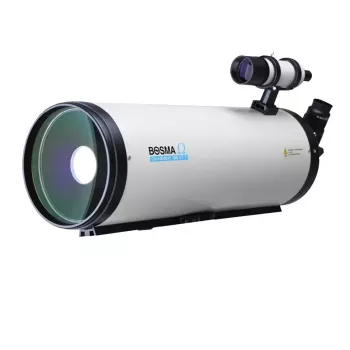
If high magnification and crisp lunar/planetary sessions are the priority, the 200/2400mm High-Power Astronomical Telescope for Stargazing Enthusiasts is positioned for that style of observing. With a labeled 200mm aperture and 2400mm focal length, it’s a classic “high-power, narrower field” combination—best enjoyed with steady mounting, careful focusing, and nights with calmer atmospheric conditions.
For comfort and equipment longevity, a stable indoor environment and organized gear can make sessions easier to repeat. In very dry climates, maintaining reasonable humidity can help protect some stored materials (and keep observing rooms more comfortable), so a 6L Smart Humidifier with Warm & Cool Mist, 60-Hour Run Time, Alexa Compatible may be a helpful home add-on. For keeping accessories easy to grab—cases, charts, small boxes, and tools—an indoor organizer like the Multi-Tiered Plant Stand – 11 Pot Indoor Flower Shelf, Tall Metal & Wood Rack can double as a convenient staging area.
For additional observing tips and sky planning, reputable references include NASA Solar System Exploration, Sky & Telescope observing resources, and the International Dark-Sky Association for light pollution guidance.
FAQ
How much magnification is actually usable for planetary viewing?
Usable magnification depends on atmospheric seeing, optical alignment, and mount stability. Many nights support roughly 150–250× with a sharper image, while very high power is occasional and only rewarding when the air is unusually steady.
Is a 200mm telescope good for deep-sky observing?
A 200mm aperture gathers substantial light for brighter clusters, planetary nebulae, and many showcase targets, especially under darker skies. With a long focal length, the field of view can be narrow, so large objects may be harder to frame without a longer focal-length eyepiece.
What’s the easiest way to improve image sharpness on the Moon and planets?
Let the telescope cool to ambient temperature, focus carefully (and refocus as conditions change), and verify collimation if the design requires it. Reduce vibration, choose magnification based on seeing, and observe targets when they’re higher in the sky to look through less turbulent atmosphere.












Leave a comment